

Dear Members,
May has been another busy month for FACE in Brussels.
We have attended several important meetings, both online and in person, including the EU Nature Directors’ Meeting and a high-level meeting on tackling the illegal killing of birds—a key area that must remain active.
- Our advocacy work continues with the institutions, for example:
The European Parliament is currently formulating its position on the CITES convention, with implications for the movement of hunting trophies. - FACE is closely monitoring amendments regarding animal transport and dog welfare.
FACE’s working groups have remained active. We recently held a well-attended meeting of the Ammunition Working Group to discuss the proposal to restrict lead in ammunition under REACH.
This week, the Animal Health Working Group focused on assisting FACE Members with national discussions aimed at making “small quantities” of game meat more accessible.
Finally, we are preparing for the FACE Board Meeting on 3 June, which will feature an event in the European Parliament celebrating 20 years of the FACE–BirdLife Agreement, attended by the EU Environment Commissioner, Jessica Roswall.
We hope you enjoy the May Monthly Report.
 Dr. David Scallan
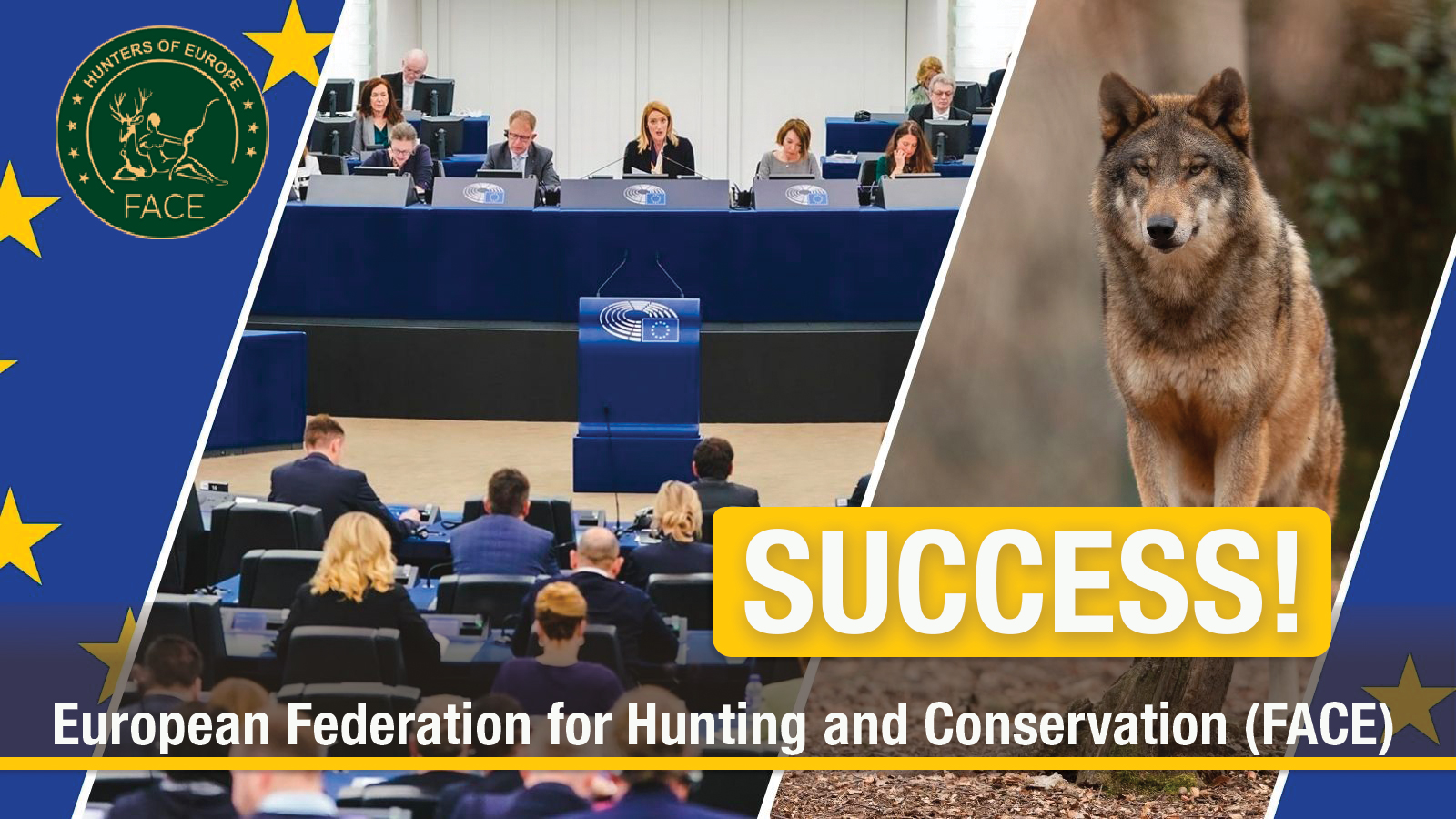
What happened: On 8 May 2025, the European Parliament approved the European Commission’s proposal to amend the protection status of the wolf under the EU Habitats Directive, shifting Canis lupus from Annex IV “strictly protected” to Annex V “protected”. This key development introduces greater flexibility for Member States in managing growing wolf populations.
The vote follows over 18 months of political debate and stakeholder engagement, supported by the European Federation for Hunting and Conservation (FACE) and the European Landowners’ Organization (ELO). It also builds on the December 2023 Commission proposal and the Bern Convention Standing Committee’s endorsement in late 2024.
Why it matters: The vote reflects the successful recovery of wolf populations across Europe and recognises the need for a broader set of management tools. It empowers Member States and local actors to respond more effectively to increasing human-wildlife conflicts, while maintaining strong conservation standards.
According to Laurens Hoedemaker, FACE President: “FACE welcomes this vote, which will reduce some heavy bureaucratic and legal conflicts associated with ‘strict protection’. Moreover, it shows that EU legislation can adapt where needed.”
What’s next: The Council must still approve the decision. Once adopted and published in the Official Journal, Member States will have 18 months to implement the changes into national law. FACE and ELO will continue to support Member States in developing science-based, locally adapted wolf management plans.

What happened: On 8 May, the European Parliament approved changes to the annexes of the Habitats Directive to downlist the wolf.
The ENVI Committee coordinators proposed the use of the Urgent Procedure (Rule 170), validated during the 6 May plenary session. The vote took place on 8 May, with 371 votes in favour and 162 against. Two amendments to reject the proposal were introduced, but failed.
This vote follows the December 2024 decision to downlist the wolf under Appendix III of the Bern Convention, effective from 7 March 2025.
Why it matters: The vote reflects the successful recovery of wolf populations in Europe and the growing need for flexibility at national and regional levels. The wolf remains “protected” at the EU level, but this change offers a more manageable legal framework, reducing excessive burdens while supporting coexistence measures such as prevention, monitoring, and stakeholder engagement.
What’s next: The Council must approve the decision. Once adopted, it will be published in the Official EU Journal. Member States will then have 18 months to implement the changes nationally.
Read FACE PR on this.
For further information, please contact: guillaume.agede@face.eu

What happened: FACE participated in the Waterfowlers’ Network meeting held on 13–15 May in Finland. Members from Italy, Ireland, the UK, and Germany gathered, hosted by the Finnish Hunters’ Association, to discuss practical waterbird conservation and management issues at the international level.
Why it matters: Habitat loss is a major threat to biodiversity, and therefore hunting. The Waterfowlers’ Network works to promote local solutions that enhance duck productivity at important European breeding sites. A key project involves the placement of duck nesting tubes, which have shown significantly higher reproductive success rates. Another notable achievement was funding for wetland creation in Finland from the Danish Hunters’ Association (Danmarks Jægerforbund), the Italian Hunting Federation (Federazione Italiana della Caccia – FIDC), and the Irish National Association of Regional Game Councils (NARGC). Finland is a key EU country for waterfowl production, and participants visited newly created wetlands funded by these contributions, which are already hosting a significant number of waterbirds.
Take a look at some of the wetlands created thanks to FACE Members’ support:
What’s next: FACE’s work for waterbirds and wildlife conservation continues, in cooperation with Members actively working in the field.
For further information, please contact: stanislas.sibille@face.eu
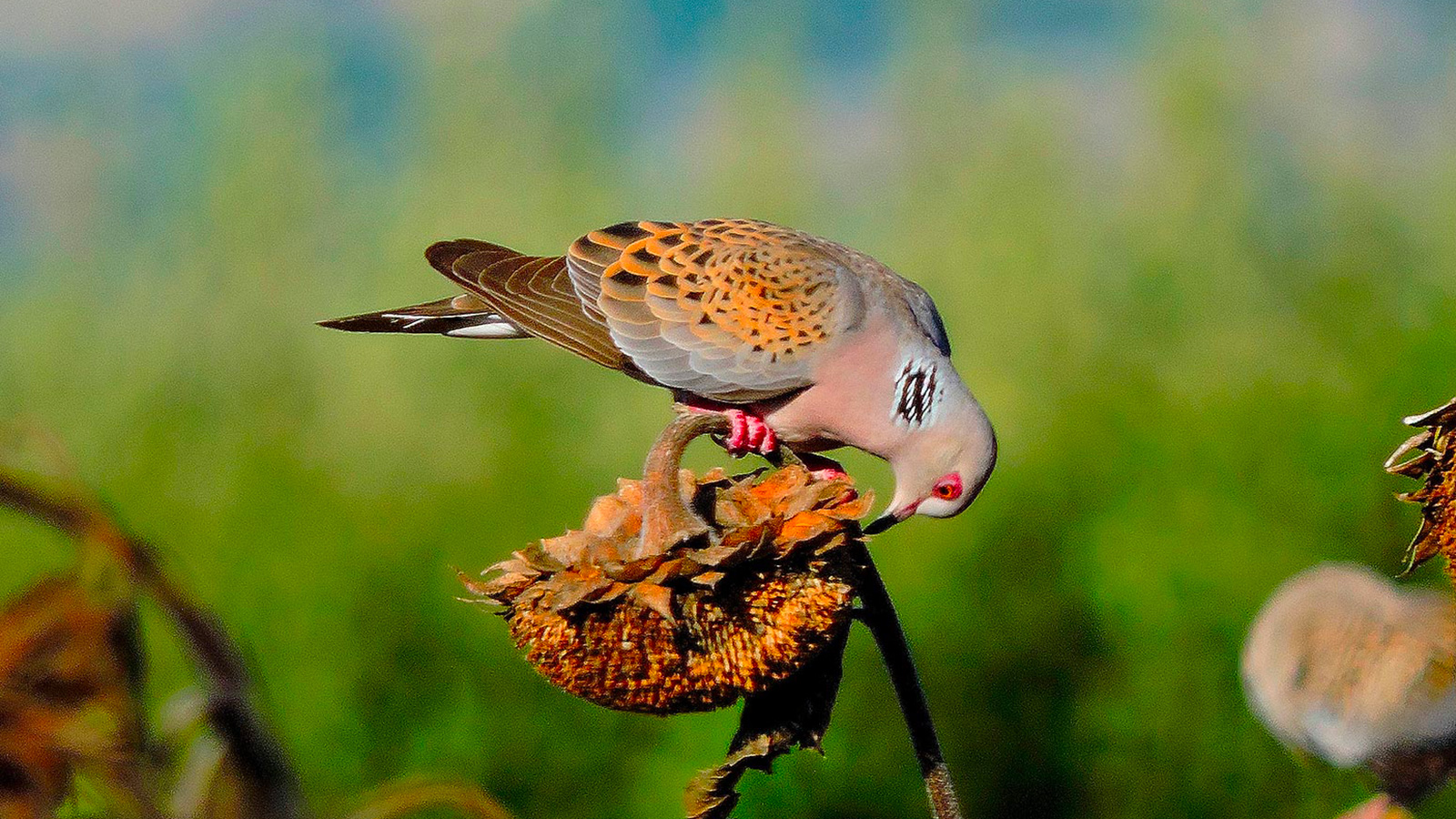
What happened: Countries across Europe reported on efforts to reduce illegal bird killing at the annual MIKT meeting of the Convention on Migratory Species (CMS) and the Bern Convention, held in a hybrid format at the UN Campus in Bonn (13–15 May 2025). The main focus was the updated 2023 (illegal killing) scoreboard analysis and discussions on the upcoming mid-term assessment due this year. As a reminder, the Rome Strategic Plan 2020–2030 aims to reduce illegal killing by 50% by 2030.
BirdLife International and EuroNatur presented their shadow report The Killing 3.0, which suggests that countries are not on track to meet this target. Unlike previous reports, this version relies on ‘trend’ data from NGO and expert questionnaires rather than direct estimates of birds killed.
FACE presented findings on compliance and enforcement in Turtle Dove hunting for 2024, based on Member State responses to the European Commission. These showed that the rate of detected infractions was near zero, despite some isolated issues.
Why it matters: Illegal killing of birds is frequently cited as a significant threat to bird conservation and, if poorly communicated, can severely harm the image of hunting. Increasing attention is being paid to illegal activities linked to hunting tourism and the fate of GPS-tagged birds, both of which require serious scrutiny.
What’s next: The mid-term assessment of the Rome Strategy will be finalised by year-end and presented at the CMS COP in March 2026. The next MIKT/Bern Convention Special Focal Points meeting will be held online, with an in-person meeting scheduled for 2027 in Croatia.
Documents from the meeting HERE.
For further information, please contact: cy.griffin@face.eu

The European Union is continuing its work on the proposed restriction of lead in ammunition under the REACH regulation. The proposal, which could have significant impacts on hunting and shooting activities across Europe, is currently under review in the REACH Committee, where representatives from EU Member States evaluate the draft legislation.
With discussions still ongoing, FACE strongly encourages its members to remain actively engaged in dialogue with their national governments. It is essential that the perspectives and practical realities of hunters are well understood and taken into account in this critical phase of the legislative process. National-level input can play a decisive role in shaping the final outcome.
The next meeting of the EU REACH Committee is scheduled for the end of June 2025. FACE will continue to monitor the process closely and provide updates, but engagement from national hunting organizations remains key. Together, we must ensure that any new restrictions are workable in practice inlcuding with sufficient transition periods and derogation conditions.
For further information, please contact: seppo.puustinen@face.eu

What it is: On 14 May 2025, the European Commission presented a legal proposal to simplify the Common Agricultural Policy (CAP). It follows the 2024 CAP Targeted Review, which reduced administrative burdens but weakened several of the environmental conditions “GAECs” (e.g. GAEC 8 on setting aside 4% of arable land). The current proposal further reduces bureaucracy and aligns the CAP with practical needs. Simultaneously, debates over the future CAP budget allocations are ongoing. The European Commission’s February 2025 reforms focused on strategic investments, which sparked opposition to merging the CAP budget with other EU policies. The European Parliament rejected this consolidation.
Why it matters: This simplification package will affect the application of GAECs, which benefit biodiversity and small game. Under the new rules:
- Certified organic farms will automatically meet certain funding requirements
- Farmers protecting peatlands/wetlands (GAEC 2) may receive compensation
- Small farmers will be exempt from GAEC obligations
What’s next: The proposal moves to the European Parliament and Council for approval. Further simplification measures are expected later this year.
For further information, please contact: valentina.siddi@face.eu
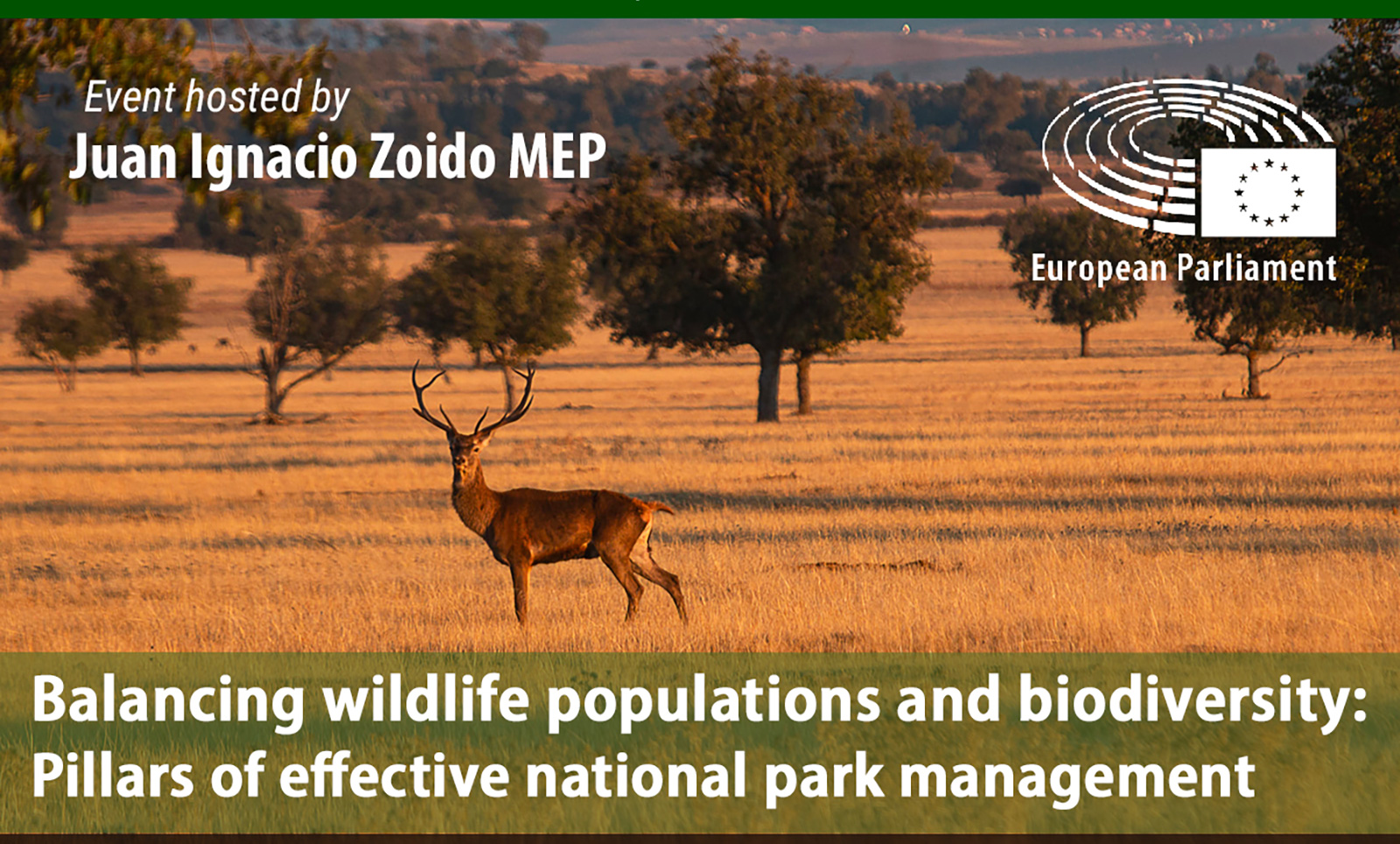
What happened: On 29 April 2025, a policy event hosted by MEP Juan Ignacio Zoido (EPP, Spain) took place in the European Parliament to address the role of sustainable wildlife management in Europe’s national parks. The event brought together key stakeholders including policymakers, conservationists, landowners, and scientists to discuss current challenges and practical solutions for balancing conservation with responsible land use.
The event opened with remarks from MEP Zoido, who emphasised the need for science-based approaches and local engagement in national park governance. The roundtable discussion featured contributions from:
- Frank Vassen, European Commission (DG Environment)
- Dr. David Scallan, FACE Secretary General
- Jurgen Tack, ELO Secretary General
- Miguel Temboury, Parque Nacional de Cabañeros (AAPNC)
Key issues addressed included the consequences of restricting wildlife management in protected areas, particularly the risk of overpopulation of certain species and its impact on biodiversity and rural livelihoods. Speakers also underlined the importance of involving local communities and landowners in conservation strategies and aligning policies with ecological realities on the ground.
A central feature of the event was the screening of the Spanish documentary “Cabañeros”, introduced by Rafael Sánchez Pérez de Villaamil, Forestry Engineer (AAPNC). The documentary illustrated the socio-environmental challenges faced in the Cabañeros National Park and served as a case study for broader management issues in protected areas.
Why it matters: As the debate around biodiversity and land use intensifies, this event highlighted the need for balanced, inclusive, and evidence-based approaches in managing Europe’s national parks. It reinforced that sustainable wildlife management is not in opposition to conservation goals but often essential to achieving them.
What’s next: FACE will continue engaging with EU institutions and stakeholders to promote workable, science-based frameworks for wildlife management in protected areas, particularly those under the Natura 2000 Network.
For further information, please contact: communication@face.eu
Hunting is a deeply ingrained tradition in Europe, with seven million hunters participating in various forms of game pursuit across the continent. However, concerns about hunting safety have escalated in parts of Europe following some tragic accidents.
The good news is that hunting-related death accidents have decreased in many countries thanks to the hunting examination, awareness-raising campaigns and safety measures pushed by the hunting community. While regulatory changes such as mandatory safety training and high-visibility gear in place across Europe, one area remains under-utilised: technology.
The Nordic countries have effectively minimised hunting accidents, with Sweden, Norway, and Finland reporting significantly fewer incidents than most other nations. A key factor is the type of hunting; for example, more accidents happen during driven hunts than other hunting methods. However, driven hunts occur frequently in the Nordic countries, but with few accidents.
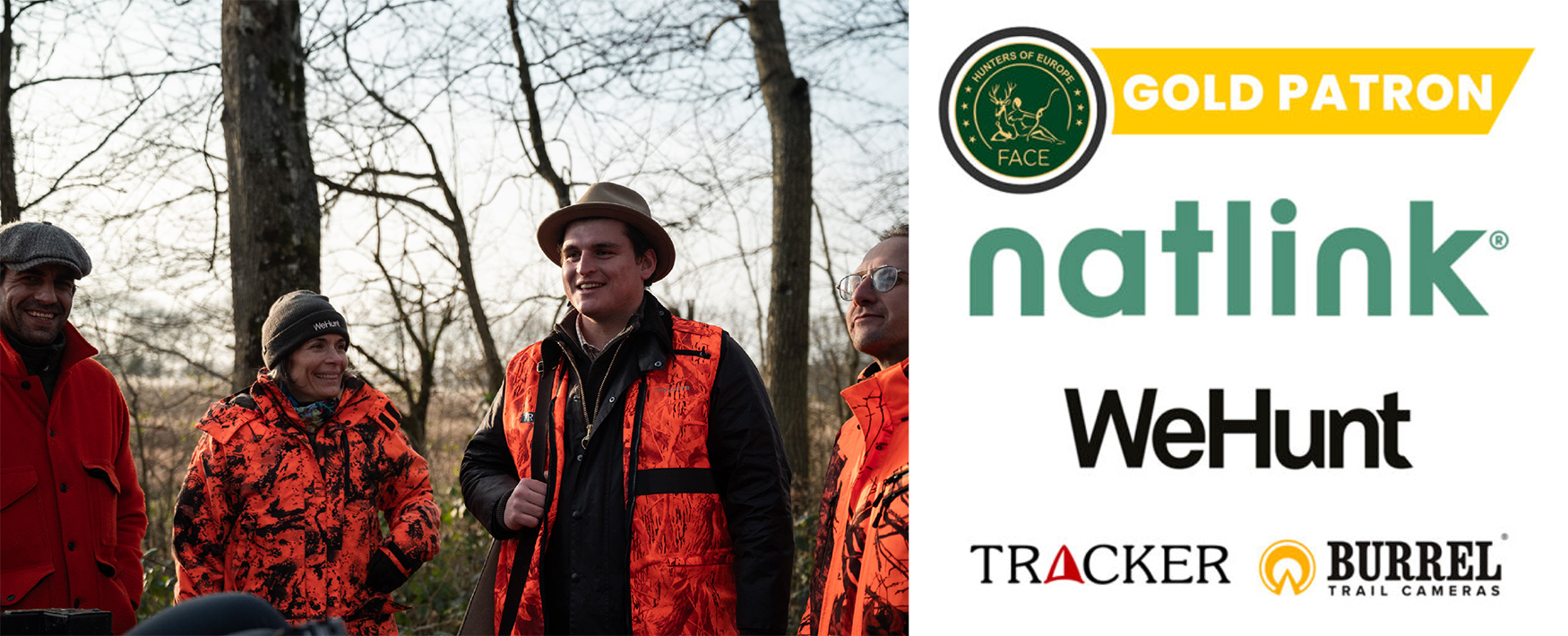
While proper theoretical and practical training remains the decisive factor, the widespread adoption of WeHunt has been a significant contributor to this achievement, serving as a digital hunting application that provides real-time tracking of all participants during a hunt. By ensuring that hunters are constantly aware of each other’s locations and warning users when they are in unsafe shooting positions, WeHunt has contributed to a significant reduction in hunting-related accidents in the Nordics. Given its demonstrated effectiveness, other countries have an opportunity to adopt WeHunt as a cost-effective and swift solution to enhance hunting safety and align its accident rates more closely with those of Northern Europe.
One of the most notable safety innovations in the Nordic hunting scene is WeHunt, a smartphone application that has become ubiquitous among Scandinavian hunting teams, provided by the hunting tech company Natlink (Natlink – products). WeHunt is designed to make group hunts easier and safer by offering real-time GPS tracking of all participants and dogs on a digital map (Features – Wehunt). In practice, this technology has contributed to accident reduction in several ways.
Learn how Real-Time Tracking Tech such as WeHunt Reduces Accidents: PDF HERE
Since 2020, the FACE Patron Programme has provided industry partners and other organisations with a way to support a strong future for hunting and conservation in Europe.
Launched by former FACE President, Torbjörn Larsson, the programme was designed to strengthen FACE’s role in shaping the best context for hunting and conservation.
Now, under the leadership of FACE President Laurens Hoedemaker, the programme continues to grow, ensuring long-term support for FACE’s advocacy efforts.
For industry representatives and business leaders interested in exploring opportunities to support FACE, please contact FACE Secretary General, Dr David Scallan, at david.scallan@face.eu.
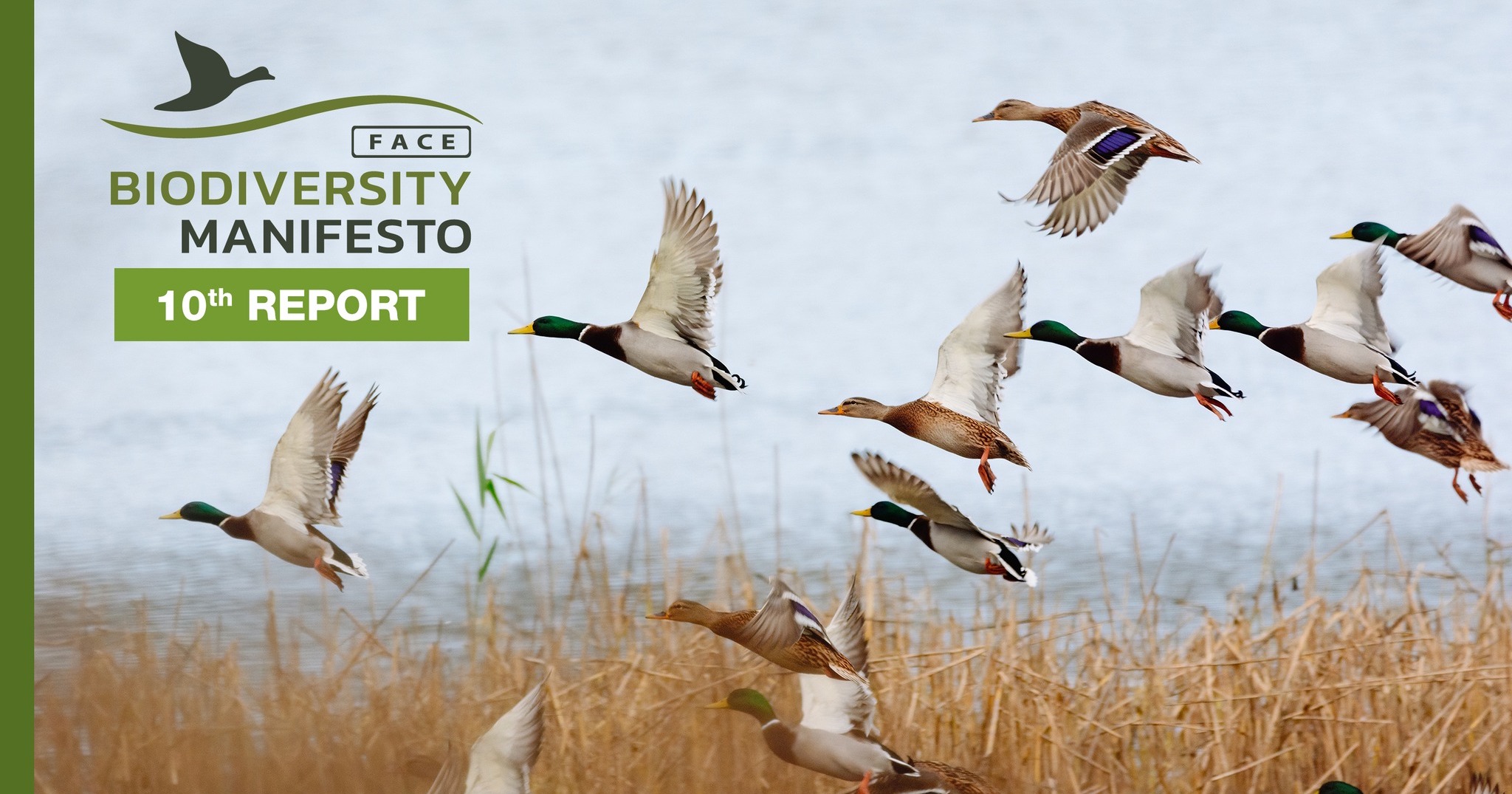
We are proud to present the 10th FACE Biodiversity Manifesto Report, showcasing 581 conservation initiatives by hunters, including 51 new projects added in 2024. The report highlights key initiatives, demonstrating hunters’ crucial role in preserving Europe’s biodiversity.
Aligned with nature restoration goals, the report documents over 200 habitat restoration projects, mainly focused on wetlands and farmland, directly supporting the Nature Restoration Regulation.
📄 Read the new BDM report here
The FACE Biodiversity Manifesto is the largest database of hunting-related conservations projects in Europe. If you know of, or are involved in, a project related to conservation that includes hunters, please share some basic facts here or send the survey to the responsible person. We are looking for all types of projects, small or big, private or public, completed, still ongoing or under development. Thank you!